CATEGORY: News
Dateline: LOMAMI NATIONAL PARK, Democratic Republic of Congo — August 6, 2026
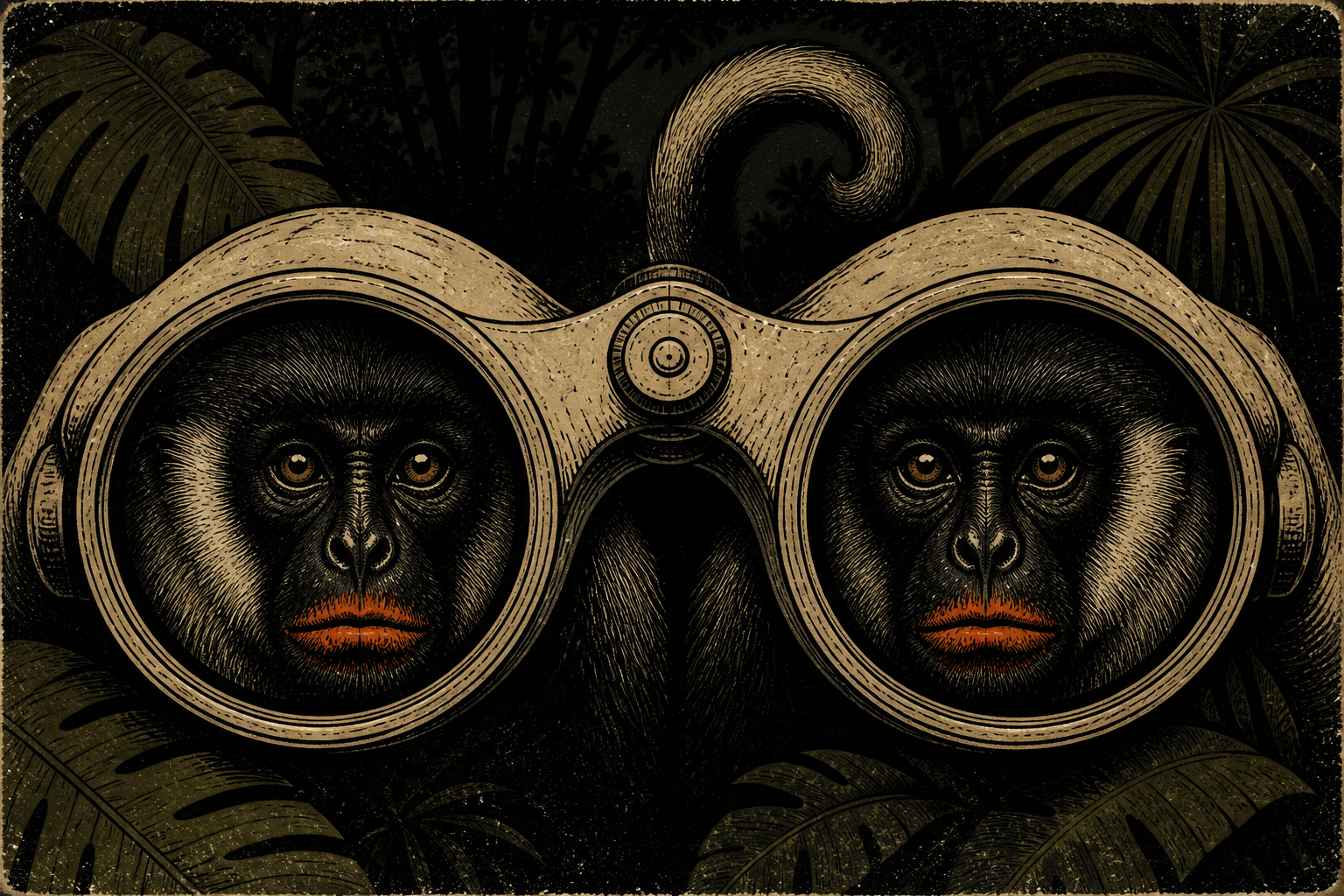
In a high, closed canopy between two great rivers, a black monkey with startling orange lips moves through the trees in small groups. Science has now given it a formal name: Colobus congoensis. People living near the animal’s range already had one. They called it Likweli.
A peer-reviewed study published July 15 in PLOS ONE describes the Likweli as a new species of African colobus monkey. Researchers combined field observations, anatomy, mitochondrial evidence and vocal analysis to distinguish it from other colobus populations. The team recorded 114 observations between 2018 and 2022 across an estimated range of roughly 1,700 square kilometers.
The animal appears largely restricted to forests between the Lomami and Congo, or Lualaba, rivers in east-central Democratic Republic of Congo. Researchers most often encountered it in small groups averaging about six animals, sometimes moving alongside other monkey species.
Its formal recognition is rare. The research team describes it as only the fifth new African monkey species formally identified in 75 years. Yet “new” requires care. The discovery is new to scientific classification, not necessarily to the communities whose languages, travel and observation helped make the animal legible to outside researchers.
That distinction matters far beyond one species. Popular accounts of cryptids often imagine an unknown animal waiting in an untouched wilderness for an outsider to discover it. Real biological discovery is usually less theatrical and more interesting. It can require years of repeated sightings, tissue or genetic evidence, comparison with museum specimens, analysis of calls and close cooperation with people who already understand the landscape.
The Likweli’s separation from its nearest relatives also presents an evolutionary puzzle. Its apparent closest living relative is geographically distant, raising questions about how historical river systems, forest changes and isolated populations shaped its development. Researchers still need a clearer picture of its numbers, range and vulnerability.
Conservation urgency follows close behind recognition. A rare primate with a limited known range may face habitat loss, hunting and political instability before researchers can establish a reliable population estimate. Public interest can help, but it can also create risks if precise locations are circulated without care.
The Likweli therefore belongs in a different kind of mystery story. There is no need to turn it into a monster or pretend local knowledge did not exist. Its actual story is about the boundary between familiarity and formal proof—and about how much life may remain scientifically undescribed even in places where human beings have lived, watched and named the world for generations.
Why It Matters
The Likweli demonstrates what evidence-based cryptozoology should look like: local knowledge, patient fieldwork, genetic testing and respect for an animal whose survival matters more than the excitement of “discovery.”